


 (843) 343-4542
 gerry@mda-recon.com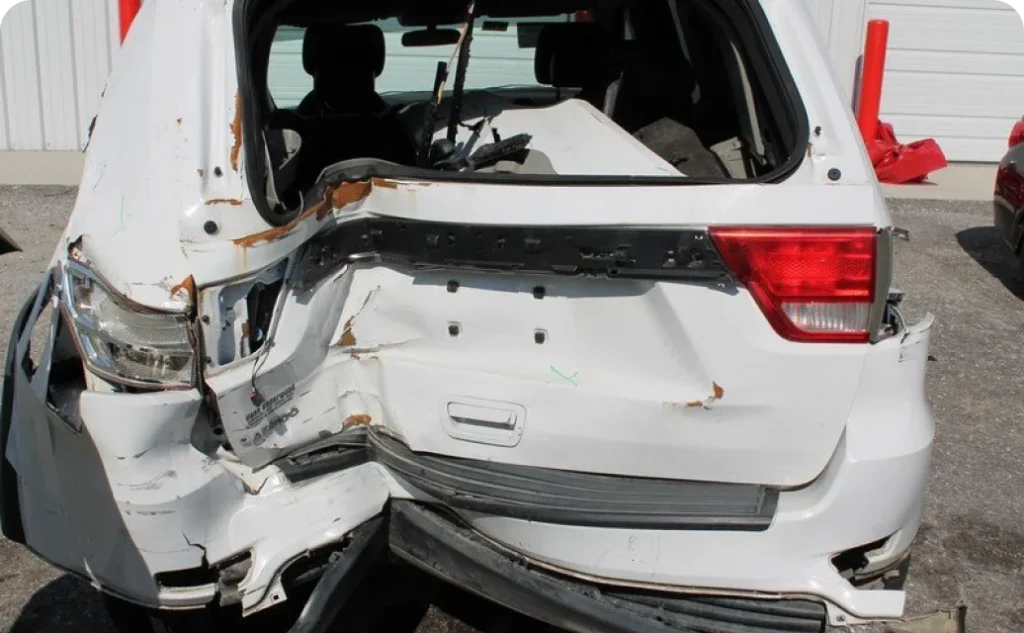
 Gerald C. McDevitt
Low Delta-V Collisions and Disputed Injury Claims: What the Physics Actually Show
Low-speed impacts produce less vehicle damage but can still generate significant occupant forces — forensic reconstruction can distinguish…
Tire marks, crush damage, final rest positions, and EDR data each tell part of the story — forensic reconstruction assembles those pieces into a scientifically defensible sequence of events.
The majority of serious and fatal traffic collisions in the United States involve passenger vehicles. For attorneys handling these cases, the central questions are almost always the same: How fast were the vehicles traveling? Who had the right of way? Did either driver have time to react? What does the physical evidence show about the sequence of events? A qualified forensic reconstruction expert answers these questions using physical evidence, vehicle data, and established scientific methodology — not speculation, not assumption, and not the competing narratives of the parties involved.
Passenger vehicle cases are deceptively complex. Because these collisions happen so frequently, there is a tendency among insurers, attorneys, and even some investigators to treat them as routine. In reality, the reconstruction of a passenger vehicle collision can turn on details that are invisible to an untrained observer: a scuff mark on the roadway, a tire mark’s curvature, the timing of airbag deployment, the position of a steering wheel at the moment of impact. Each of these data points contributes to a defensible, scientifically grounded understanding of what happened.
Passenger vehicle cases often involve disputed fault, contested injury claims, and competing witness accounts. The physical evidence does not have an opinion. It does not favor the plaintiff or the defendant. When properly collected and analyzed, it provides an objective foundation for the key physical questions — speed, braking, point of impact, vehicle trajectories, driver inputs, and the sequence of events from pre-impact through final rest.
For plaintiff counsel, reconstruction can establish the physical facts on which negligence and causation arguments rest. Determining whether a vehicle was speeding or braking replaces a he-said-she-said dispute with documented physics. For defense counsel, the same analysis can determine whether the opposing driver contributed to the collision, that the collision severity is at odds with the injuries claimed (a question a biomechanical or medical expert can then address), or that the physical evidence simply does not support the plaintiff’s theory of the case.
Gerald McDevitt reconstructs passenger vehicle collisions using a consistent methodology: scene documentation, physical evidence analysis, vehicle damage assessment, event data recorder extraction, and integration of all available data into a coherent reconstruction of events. What changes from case to case is the evidence the scene presents.
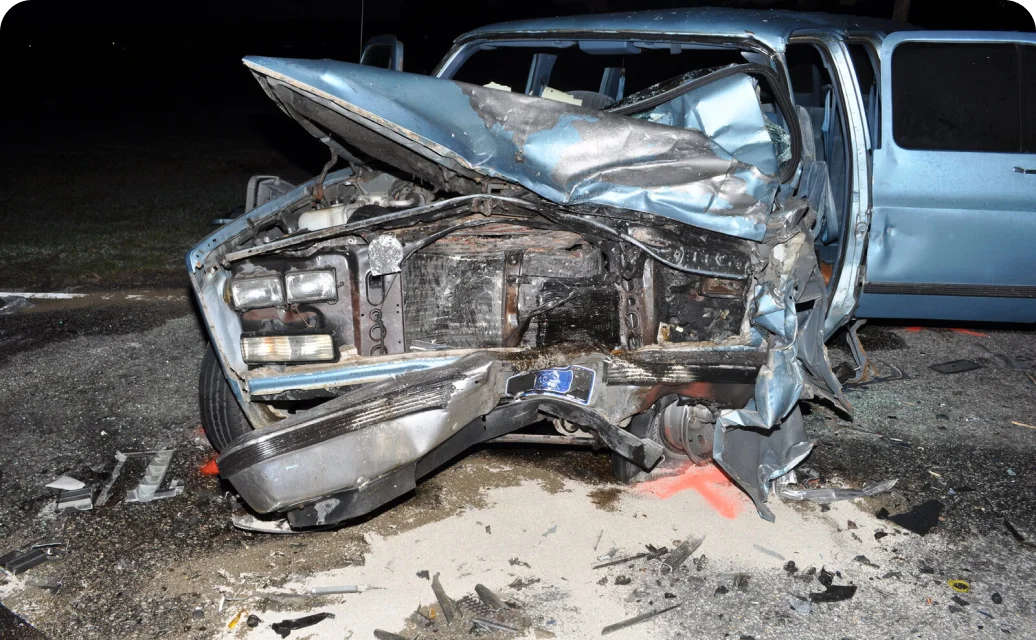
A passenger vehicle collision produces a large volume of physical evidence. The roadway evidence — skid marks, yaw marks, gouges, fluid trails, debris fields, and final rest positions — tells the story of how the vehicles moved before, during, and after impact. The vehicles themselves carry a record of the collision in their crush damage, paint transfer, and component deformation. And modern passenger vehicles contain a digital record in the Event Data Recorder (EDR) module integrated with the airbag control system.
When the collision triggers a recorded event, the EDR data typically includes pre-crash indicated speed, accelerator position, brake switch status, seat belt buckle status, and the change in velocity (delta-V) during the collision, and many vehicles also record steering input. For passenger vehicle cases, this data is often central, read within its limits and checked against the physical evidence. It can confirm or contradict driver accounts, establish whether brakes were applied before impact, and quantify the severity of the crash in objective physical terms.
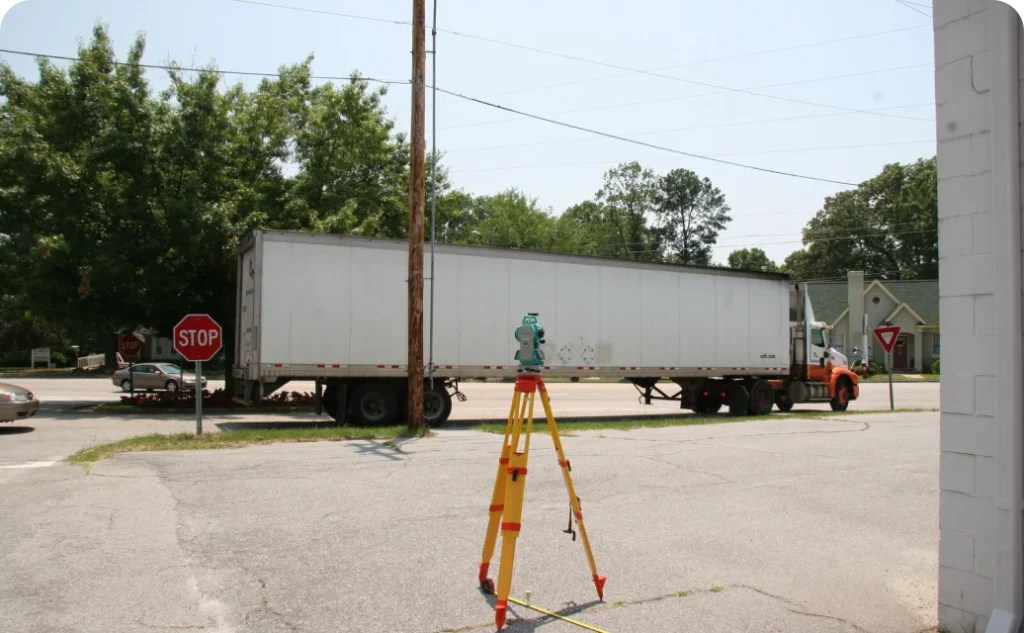
Gerald McDevitt integrates data from the full range of available sources: Bosch Crash Data Retrieval for EDR extraction, Emlid Reach RS3 GNSS, a Sokkia reflectorless total station for scene documentation, Autel EVO II Pro RTK V3 drone for aerial imagery and photogrammetry, Recon3D handheld LiDAR scanning for vehicle and interior documentation, and the Racelogic VBOX GNSS data logger for speed and motion data when supplementary testing is needed. No single tool answers every question. A complete reconstruction draws on whatever data sources the case requires.
A passenger vehicle reconstruction addresses more than just vehicle mechanics. In cases where perception, reaction, and decision-making are at issue, human factors analysis becomes essential. This includes visibility and conspicuity of hazards, perception-reaction time for the general driving population, available time and distance to avoid the collision, and whether conditions allowed a reasonably attentive driver to detect and respond to the hazard.
For example, a reconstruction expert might determine that a pedestrian or stopped vehicle became visible at a given distance, that the approaching vehicle was closing at a calculated speed, and that the total time available to perceive and respond was some number of seconds. That available time can then be compared against published perception-reaction values to determine whether a reasonably attentive driver would have had sufficient opportunity to detect the hazard and take effective action.
This analysis translates measurable physical conditions — speeds, distances, sight lines — into a framework the trier of fact can use to evaluate the time the driver had available to respond.
A reconstruction expert can determine vehicle speeds, the sequence and timing of events, point of impact, vehicle trajectories, driver inputs recorded in EDR data, and whether the physical conditions allowed a reasonably attentive driver to perceive and react to a hazard. The expert can also address occupant movement during the collision sequence and driver identification where the physical evidence supports it.
A reconstruction expert cannot determine the intent or conscious decision-making of a specific individual, nor what the driver subjectively perceived at any given moment. Those are questions for the trier of fact to decide based on all the evidence presented. The expert provides the physical and scientific framework; the trier of fact applies that framework to the specific driver in the case. Opinions that stray beyond the physical evidence and established scientific research are a warning sign.
The best time to retain a reconstruction expert in a passenger vehicle case is before critical evidence is lost. Scene conditions change within hours — skid marks fade, debris is cleared, vehicles are towed and repaired or released to salvage. EDR data can be overwritten or lost if the vehicle is not preserved properly. Witness memories fade. Photographs taken by responding officers, while valuable, may not capture the specific measurements and details a reconstructionist needs.
Early expert involvement allows for proper scene documentation, timely EDR extraction, coordinated vehicle inspection, and preservation of evidence that may otherwise be unavailable by the time litigation is fully underway. Even when the collision occurred months or years ago, a qualified expert can still work effectively from available discovery materials — but early involvement generally produces the strongest analysis.
Gerald McDevitt has reconstructed passenger vehicle collisions across the full spectrum of severity — from low-speed impacts with disputed injury claims to high-energy multi-vehicle fatalities. Each case receives the same rigorous methodology, the same attention to physical evidence, and the same commitment to findings that are scientifically defensible under cross-examination.
A serious passenger vehicle collision rewards careful reconstruction. The physical evidence, properly analyzed, can answer questions about speed, timing, and causation that witness accounts and competing narratives cannot settle on their own. For plaintiff and defense counsel alike, retaining a qualified forensic reconstruction expert early in the case turns disputed questions into documented analysis — and gives the finder of fact a reliable foundation for resolving the case on its merits.
1970 Armory Drive, Mount Pleasant, SC 29466
Gerald C. McDevitt
Low-speed impacts produce less vehicle damage but can still generate significant occupant forces — forensic reconstruction can distinguish…
 Gerald C. McDevitt
Proving that impairment caused a fatal collision — not just that the driver was impaired — requires a…
 Gerald C. McDevitt
A vehicle cannot leave a scene without leaving evidence — paint transfer, glass, tire impressions, and debris patterns…
 Gerald C. McDevitt
Tractor-trailer and fleet vehicle collisions involve federal regulatory requirements, electronic logging devices, and complex vehicle dynamics that demand…