Event Data Recorder & Black Box Analysis
Event Data Recorder (EDR) / Black Box Analysis
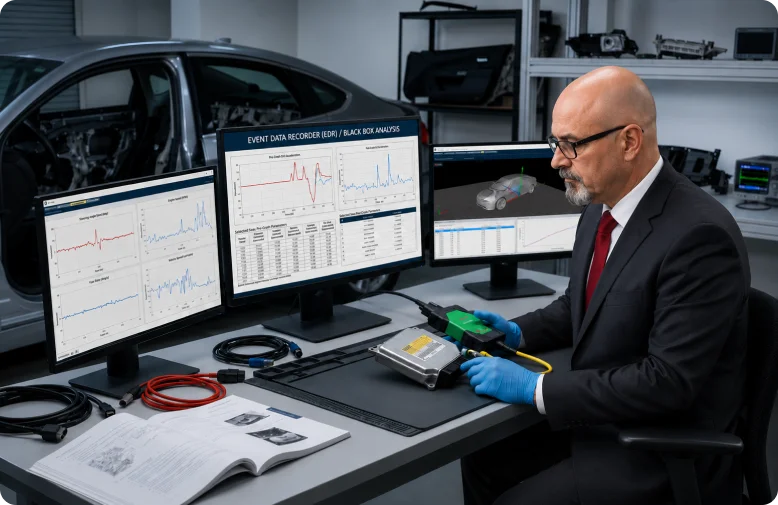
Modern vehicles store critical pre-crash and crash event data through Event Data Recorders (EDR), commonly referred to as black box systems. Gerald McDevitt performs data extraction and detailed analysis to identify key factors such as speed, braking, throttle input, and impact timing.
This data provides an objective foundation for reconstruction, and is analyzed alongside the physical evidence rather than on its own.
Critical Data Analysis for Attorneys, Insurers & Investigators
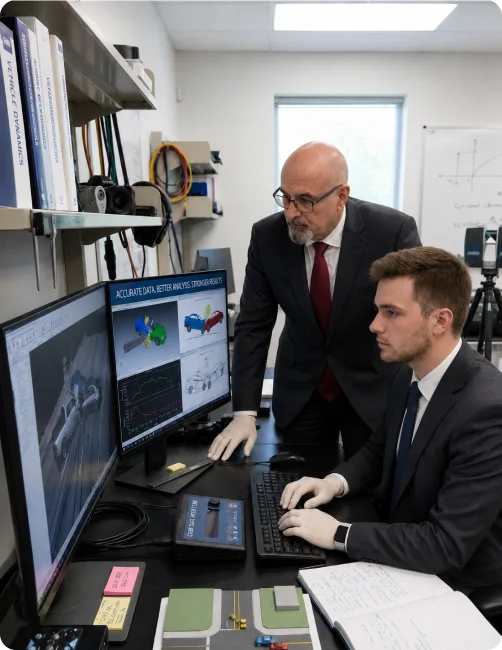
EDR data often plays a central role in understanding how a collision occurred. Gerald McDevitt analyzes crash data alongside physical evidence, scene documentation, and vehicle damage, because raw data can mislead without that context. Findings are explained plainly and tied to the reconstruction analysis, covering speed, driver input, and event timing.
TYPES OF DATA SOURCES HANDLED
Passenger Vehicle EDR Systems
Data is extracted from manufacturer-installed Event Data Recorders in passenger vehicles, capturing critical parameters such as speed, braking, throttle input, and crash timing. Gerald McDevitt analyzes this data to understand driver actions and vehicle behavior in the moments leading up to and during the collision.
Commercial Vehicle Data Systems
Heavy commercial vehicles record operational data through engine control modules (ECM) and electronic logging devices (ELD). Commercial vehicle ECM and heavy-vehicle event data extraction is performed by James Sloan, an ACTAR-accredited reconstructionist and IPTM adjunct faculty member with manufacturer-specific HVEDR training (Cummins INSITE, Detroit Diesel DDDL, Caterpillar ET), engaged by McDevitt and Associates, Inc. as a qualified sub-contractor.
GPS & Telemetry Data
Supplemental GPS-based data — for example from a Racelogic VBOX GPS data logger — is used to evaluate speed, acceleration, and movement, providing independent measurements that can be compared with EDR findings and physical evidence.
Multi-Source Data Integration
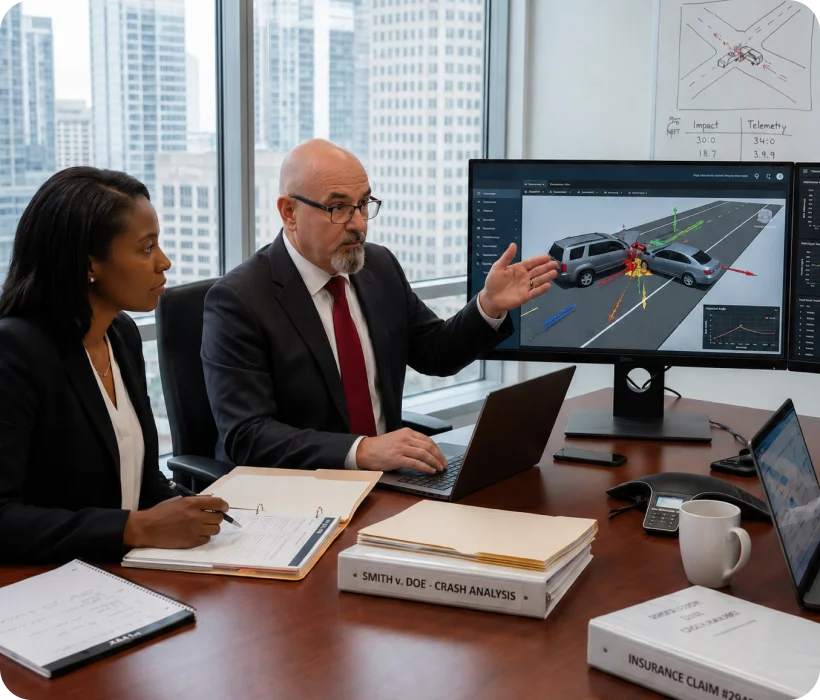
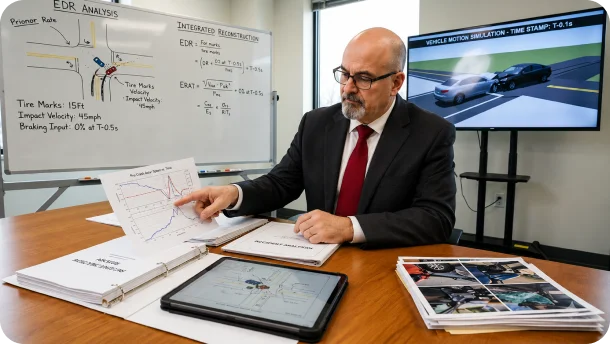
EDR data is not evaluated in isolation. Gerald McDevitt integrates crash data with scene measurements, mapping, and vehicle damage analysis, and any disagreement between those sources is identified and addressed rather than set aside.
Third-Party Data Review
Previously extracted data or opposing expert reports may be reviewed to check accuracy and identify inconsistencies. Gerald McDevitt evaluates the methodology, the data interpretation, and the conclusions, and states where the record does or does not support them.
Contextual Analysis & Validation
EDR data must be interpreted within the context of the entire collision. Not all vehicles record the same parameters, and certain data points may have limitations based on system design or crash conditions.
Gerald McDevitt evaluates these limitations and explains how the data agrees with or differs from the physical evidence, including where a recorded value cannot be relied on.
Data Retrieval and Analysis
EDR data is extracted with the Bosch Crash Data Retrieval (CDR) tool, following the published procedures for that tool. Gerald McDevitt evaluates the reliability of the recorded parameters and correlates the findings with physical evidence, scene measurements, and vehicle damage.
All analysis is conducted using accepted scientific methods, documented so each step can be reproduced and examined.
Prepared for Deposition & Trial
All findings are documented in clear, structured reports suitable for legal proceedings. Data analysis is presented in a manner that supports expert testimony and can be explained effectively under cross-examination.
Gerald McDevitt provides deposition and trial testimony based on the analysis, explaining what the data shows and what it does not.
Request EDR / Black Box Analysis
Accurate interpretation of crash data can significantly impact case outcomes. Direct consultation is available to review available data and determine the appropriate analysis approach.