


 (843) 343-4542
 gerry@mda-recon.com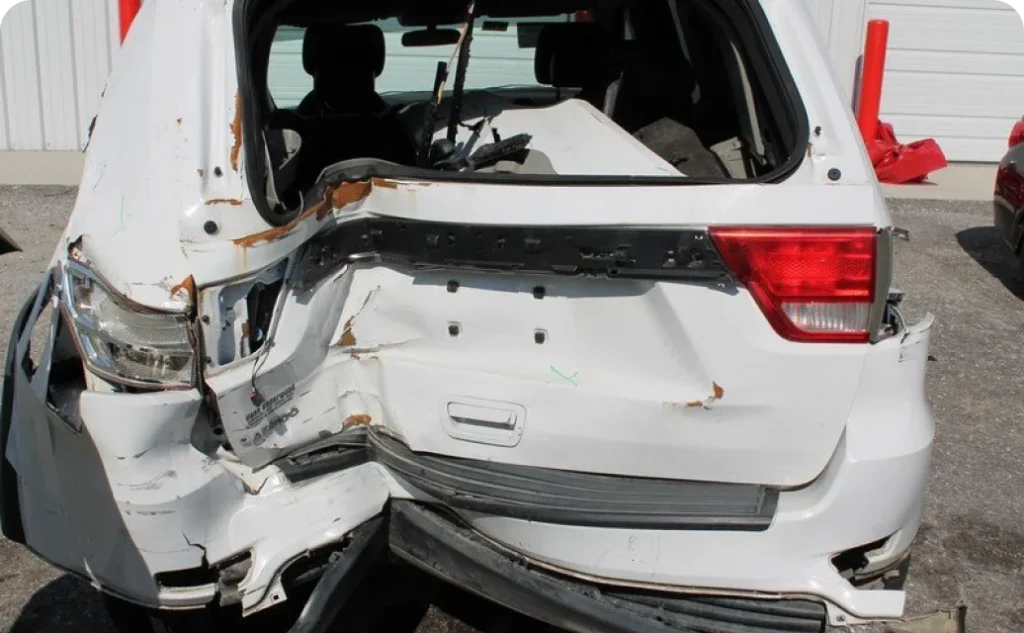
 Gerald C. McDevitt
Low Delta-V Collisions and Disputed Injury Claims: What the Physics Actually Show
Low-speed impacts produce less vehicle damage but can still generate significant occupant forces — forensic reconstruction can distinguish…
Military defense counsel have a due process right to expert assistance — this article walks through exactly how to frame an expert request that satisfies the convening authority's three-prong test.
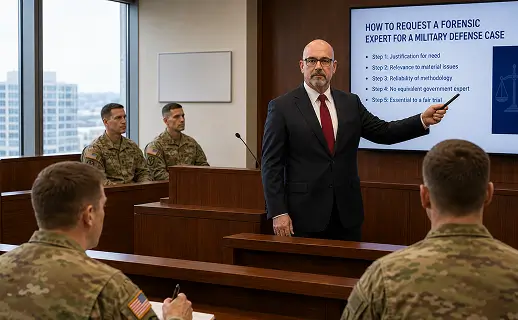
If you are a military defense counsel representing a service member charged with involuntary manslaughter (Article 119), negligent homicide (Article 134), or drunken or reckless operation of a vehicle (Article 113) under the UCMJ, you may need a forensic accident reconstruction expert to adequately defend the case. The physical evidence — vehicle speeds, brake application, driver reaction time, crash dynamics — requires scientific analysis with specialized training and equipment.
Military law provides a mechanism for obtaining expert assistance at government expense. This article explains, from the expert’s side, what information supports a well-framed request. Gerald McDevitt works for trial and defense counsel alike and applies the same methodology either way.
As a matter of military due process, service members are entitled to expert assistance when it is necessary for an adequate defense. This right exists regardless of indigency (United States v. Garries, 22 M.J. 288 (C.M.A. 1986)) — unlike the civilian system, where expert funding may depend on the defendant’s financial resources. In military proceedings, the government funds expert assistance for the defense when the need is established.
The legal foundation for this right is found in UCMJ Article 46 (equal opportunity to obtain witnesses and evidence), and R.C.M. 703(d) (employment of expert witnesses and consultants). Confidentiality of a defense expert’s work depends on how the expert is engaged: appointment as a consultant to the defense team can extend the Military Rule of Evidence 502 privilege to the consultant’s work, a protection that generally ends if the expert is named as a witness. That should be settled with counsel before privileged material is shared.
In United States v. Gonzalez, 39 M.J. 459 (C.M.A. 1994), the Court of Military Appeals (now the Court of Appeals for the Armed Forces) established the factors used to show that expert assistance is necessary. Under later decisions of that court (United States v. Freeman, 65 M.J. 451, and United States v. Lloyd, 69 M.J. 95), the defense must show a reasonable probability that an expert would assist the defense and that denial would result in a fundamentally unfair trial; the three Gonzalez factors address the first part:
First: Why is the expert needed? The defense must articulate the specific forensic questions that require expert analysis. In an Article 119 case, this might include determining vehicle speeds at the time of collision, analyzing whether the driver had adequate time to perceive and react to a hazard based on established human factors research, evaluating whether mechanical failure contributed to the crash, interpreting Event Data Recorder information, or reconstructing the physical sequence of events to test the government’s theory of the case.
Second: What can the expert accomplish for the accused? The defense must explain what the expert will do and how it will assist the defense. For a reconstruction expert, this typically includes independent scene documentation and analysis, review and interpretation of physical evidence and EDR data, perception-reaction time analysis using published human factors research, independent evaluation of the causation factors the evidence supports, preparation of an expert report and courtroom demonstratives, and, if the expert is later named as a witness, testimony at the Article 32 preliminary hearing, the court-martial, or sentencing.
Third: Why can’t defense counsel do this themselves? This prong requires the defense to explain why the specialized knowledge of a forensic expert is needed — why the attorney alone cannot develop the evidence. For accident reconstruction, this is straightforward: the application of physics, mathematics, and scientific principles to collision evidence, the operation of measurement equipment such as a total station, GNSS, and handheld LiDAR, the extraction and interpretation of EDR data, the analysis of human factors and perception-reaction time data, and the production of opinions that can withstand scrutiny require specialized training, equipment, and experience that defense counsel does not possess.
A well-framed request is specific, not generic. It identifies the forensic questions at issue in the particular case, explains the methodology the expert will employ, and connects the expert’s work to the facts in dispute.
A weak request says: “The defense requests a forensic expert to assist with the case.” A strong request says: “The defense requests a forensic accident reconstruction expert to conduct an independent analysis of the collision dynamics, including vehicle speed determination through crush energy analysis and EDR data interpretation, and to perform a perception-reaction time analysis using established human factors data to evaluate whether the accused had adequate time to detect the hazard and take evasive action.”
The difference is specificity. Whoever acts on the request needs to understand exactly what the expert will do and why it matters to the case.
Under the current R.C.M. 703(d), the defense submits the request through the channel its service’s regulations prescribe. After referral, the defense may raise the request with the military judge — ex parte for a consultant — and the judge asks whether the assistance is necessary for an adequate defense, applying the Gonzalez factors and the reasonable-probability standard. If expert assistance is ordered, the government may provide an adequate substitute rather than the specific expert requested; if it provides neither, the proceedings can be abated.
A well-documented request that addresses all three Gonzalez factors gives whoever acts on it what they need to evaluate it.
Here is a practical point that is easy to miss: you do not have to write the expert request in a vacuum. A qualified forensic reconstruction expert can review the basic case materials (collision report, photographs, charge sheet) and provide an initial case assessment that identifies the forensic questions at issue, outlines the methodology required, and explains what the expert analysis could accomplish for the defense.
The assessment identifies the forensic questions and the methodology needed to answer them; counsel decides what to request.
Gerald McDevitt provides this initial case assessment at no charge.
The right to expert assistance in military proceedings is established law. The mechanism for obtaining that assistance — R.C.M. 703(d) and the Gonzalez factors — is well established. What matters most is specificity, preparation, and a clear connection between what the expert will do and why it matters to the case. A qualified forensic reconstruction expert can support that request with an initial case assessment, ensuring that the service member’s right to an adequate defense includes the scientific expertise the case demands.
Air Force veteran. Qualified and accepted as an expert witness in courts-martial. Retainer waived for government and military counsel. Before sharing privileged case material, discuss confidentiality and expert-consultant appointment with counsel.
Gerald C. McDevitt
Low-speed impacts produce less vehicle damage but can still generate significant occupant forces — forensic reconstruction can distinguish…
 Gerald C. McDevitt
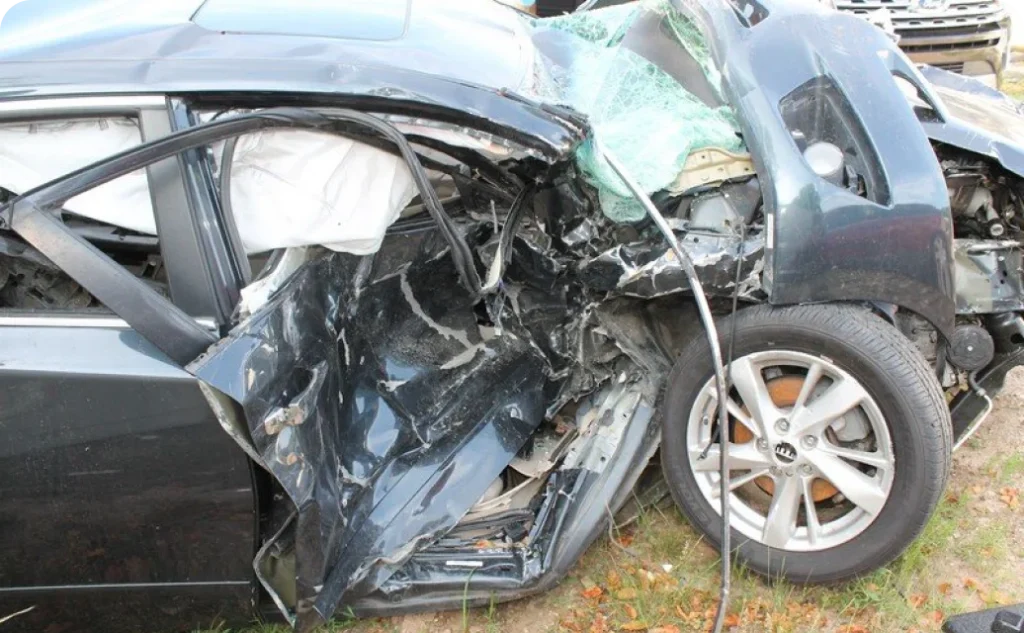
Proving that impairment caused a fatal collision — not just that the driver was impaired — requires a…
 Gerald C. McDevitt
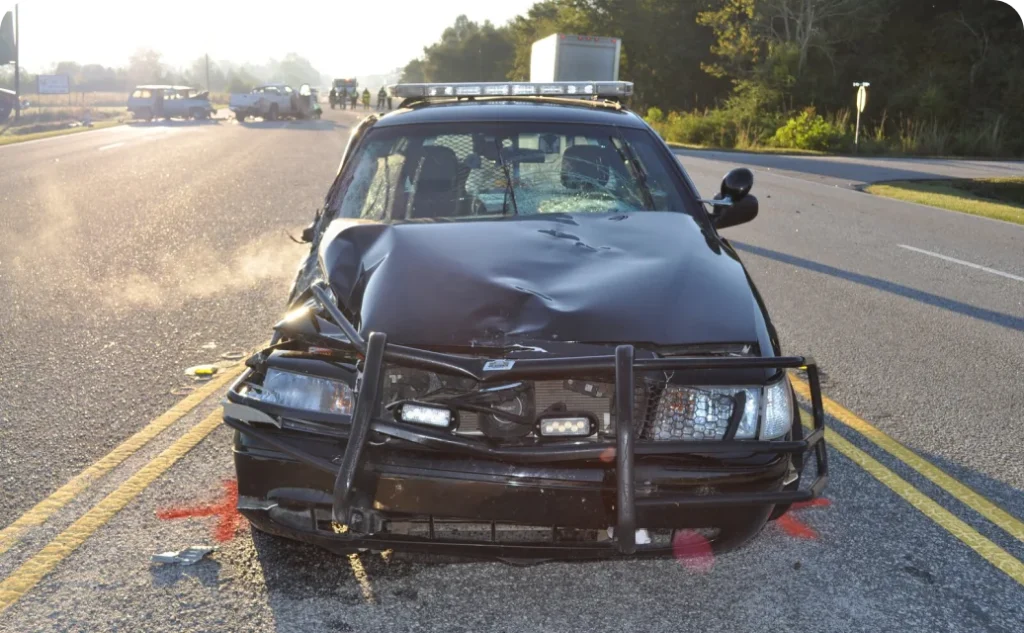
A vehicle cannot leave a scene without leaving evidence — paint transfer, glass, tire impressions, and debris patterns…
 Gerald C. McDevitt
Tractor-trailer and fleet vehicle collisions involve federal regulatory requirements, electronic logging devices, and complex vehicle dynamics that demand…