


 (843) 343-4542
 gerry@mda-recon.com
 Gerald C. McDevitt
Low Delta-V Collisions and Disputed Injury Claims: What the Physics Actually Show
Low-speed impacts produce less vehicle damage but can still generate significant occupant forces — forensic reconstruction can distinguish…
Before an expert's opinions reach the jury, they have to survive a legal admissibility challenge — understanding what courts look for can help you choose the right expert from the start.
Before a forensic accident reconstruction expert ever presents an opinion to a judge or jury, there is a threshold question that can shape the entire case: will the expert’s testimony be admitted? Federal courts and most states apply the Daubert standard, a minority of states still apply Frye, and some — including South Carolina — apply their own reliability test. These are the gatekeeping mechanisms that decide whether an expert’s opinions will be heard or excluded. For attorneys retaining or opposing a reconstruction expert, understanding them is essential.
The Daubert standard comes from the U.S. Supreme Court’s decision in Daubert v. Merrell Dow Pharmaceuticals (1993). In Kumho Tire Co. v. Carmichael (1999), the Court made clear that the same gatekeeping applies to technical and experience-based testimony, not only to laboratory science — which is why it reaches accident reconstruction testimony. The standard is written into Federal Rule of Evidence 702 and has been adopted in some form by most states. Under it, the trial judge acts as a gatekeeper and must be satisfied that the expert’s testimony is both relevant and reliable before the jury hears it.
The reliability inquiry often considers several factors, commonly called the Daubert factors: whether the theory or technique can be and has been tested, whether it has been subjected to peer review and publication, the known or potential rate of error, the existence and maintenance of standards controlling the technique’s operation, and whether it is generally accepted within the relevant scientific community. The factors are flexible, not a checklist; the court applies those that fit the discipline and the case.
Rule 702 was amended on December 1, 2023, to make two points explicit. First, the party offering the expert must show the court that it is more likely than not that each requirement of the rule is met. Second, the expert’s opinion must reflect a reliable application of the method to the facts of the case; the committee note adds that an opinion should not claim more than the method and the evidence can support. Military Rule of Evidence 702, which governs courts-martial, is modeled on the federal rule, and under Military Rule of Evidence 1102, amendments to the federal rules generally apply to courts-martial 18 months after they take effect unless the President directs otherwise.
For accident reconstruction, the Daubert factors translate into practical questions. Has the reconstructionist used established, published physics-based methods (conservation of momentum, energy analysis, kinematics)? Are those methods published in peer-reviewed literature and taught at recognized training programs? Can the expert state the uncertainty in the inputs and show how it affects the results? Does the expert follow documented standards and protocols? Are the methods generally accepted within the forensic reconstruction community? And were they applied correctly to the evidence in this case?
An expert whose methodology answers these questions gives the court what it needs to evaluate reliability. An expert whose methodology is undocumented, untested, or based on novel theories unsupported by the field is vulnerable to a motion to exclude.
The Frye standard, from Frye v. United States (1923), predates Daubert and takes a simpler approach: the expert’s methodology must be “generally accepted” within the relevant scientific community. Frye does not require the multi-factor analysis of Daubert. The question is simply whether the techniques used by the expert are recognized and accepted by other practitioners in the field.
A minority of states still apply Frye or a Frye-based test, generally for novel scientific evidence, including Illinois, New York, Pennsylvania, and Washington; California (Kelly/Frye, alongside the gatekeeping standard of its Sargon decision) and Minnesota (Frye-Mack) apply hybrid versions. South Carolina has adopted neither by name: under State v. Council (1999), its courts apply their own reliability analysis under the South Carolina Rules of Evidence. Others have moved away from it: Florida’s Supreme Court adopted Daubert in 2019, and Maryland’s highest court followed in 2020. In practice, the difference between Daubert and Frye matters less for accident reconstruction than for novel or emerging disciplines. The core methods of collision reconstruction — momentum analysis, crush energy calculations, EDR interpretation, and scene documentation — are well established and widely accepted in the field.
Whether the challenge comes under Daubert, Frye, or a state’s own test, courts look at much the same things.
Methodology over conclusions. Courts evaluate how the expert reached the opinion, not whether the opinion favors one side. An expert who uses documented, validated methods and applies them correctly to the evidence gives the court what it needs to assess reliability, whatever the conclusions are.
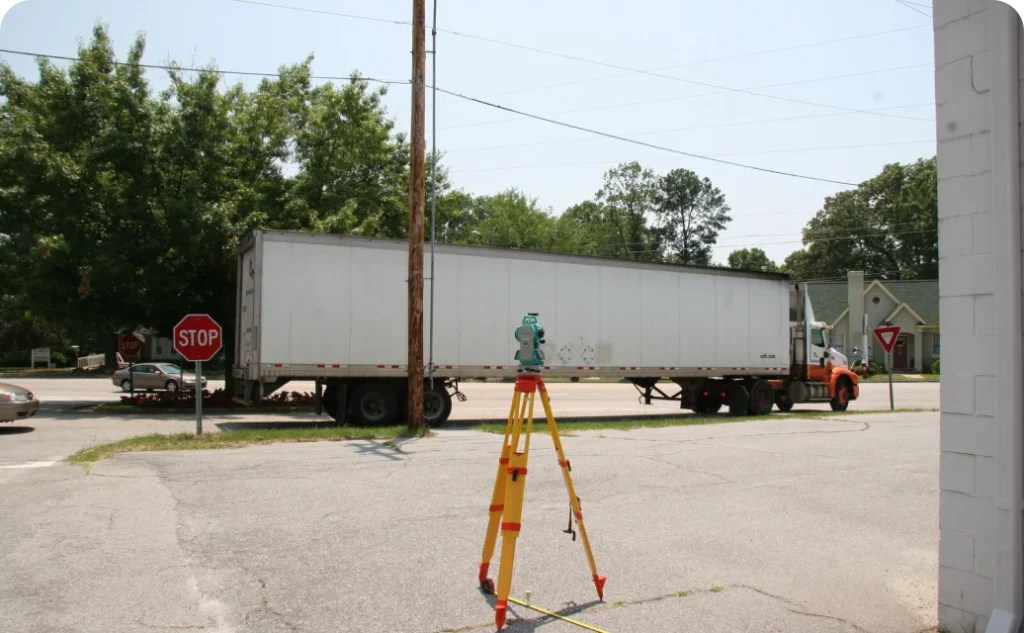
Technology and documentation. An expert who documents scenes with a reflectorless total station, GNSS positioning, RTK drone mapping, and handheld LiDAR, retrieves EDR data with the Bosch CDR tool, and produces measurable, verifiable work product gives the court something concrete to examine. Survey instruments carry published accuracy specifications, which let the uncertainty in individual measurements be stated — though an instrument specification is not the error rate of the reconstruction method itself.
Human factors analysis grounded in published research. When an expert opines on driver perception and reaction time, that analysis must be based on established, peer-reviewed human factors research — published studies on perception-reaction time distributions, visibility and conspicuity testing, and driver detection capabilities under specific conditions. An opinion about whether a driver could have seen and reacted to a hazard stands on firmer ground when it is grounded in this body of published literature and applied to the measurable conditions documented at the scene. It becomes vulnerable to exclusion when it is based on the expert’s unsupported personal judgment rather than published data.
Experience and track record. Experience bears on whether an expert is qualified, and courts regularly consider training, certifications, and prior qualification and testimony. Reliability is judged separately, on the method and how it was applied. Kumho Tire confirms that experience-based testimony is subject to the same gatekeeping, and the Rule 702 committee notes add that an expert relying on experience must explain how that experience leads to the conclusion reached.
Intellectual honesty. The expert who acknowledges the limitations of their analysis, clearly defines what can and cannot be determined from the available evidence, and does not overreach is more credible than one who claims certainty where the evidence does not support it. Courts and juries recognize the difference between an analyst following the evidence and an advocate.
Understanding admissibility standards is equally important when challenging the opposing party’s reconstruction expert. The most effective challenges focus on methodology rather than credentials. Did the opposing expert use validated methods? Did they apply those methods correctly to the specific evidence in this case? Did they account for all relevant variables? Is their analysis reproducible by another qualified expert using the same data?
Common vulnerabilities in reconstruction testimony include reliance on assumptions that are not supported by the physical evidence, use of methods not suited to the evidence or the scene, failure to consider alternative scenarios consistent with the evidence, human factors opinions that are not grounded in published perception-reaction research, and mathematical or logical errors in the analysis. A qualified reconstruction expert retained by the opposing side can identify these vulnerabilities through a peer-level review of the opposing expert’s report and methodology.
When evaluating a potential reconstruction expert, ask about their methodology before you ask about their conclusions. Request a list of cases in which they have been qualified as an expert, and ask whether their testimony has ever been excluded or limited by a court. Review their CV for relevant training, certifications, and professional affiliations. And evaluate whether they use current technology — GNSS positioning, drone mapping, EDR extraction, total station measurement, handheld 3D scanning — and how they report measurement uncertainty for each instrument.
The admissibility of expert testimony is not a formality. It is the threshold that determines whether critical evidence in your case will be heard. Whether you are retaining an expert to support your case or challenging the opposing expert’s qualifications, the analysis begins with methodology. An expert whose work is grounded in validated science, documented with measurable technology, and presented with intellectual honesty gives the court a sound basis on which to evaluate it — whether the standard is Daubert, Frye, a state’s own test, or the Military Rules of Evidence. Admissibility is always the court’s decision. Gerald C. McDevitt’s methodology is developed to meet Daubert and Frye admissibility standards, and he has been qualified and accepted as an expert in state, federal, and United States military courts.
32+ years of experience. Hundreds of fatal and serious injury collisions reconstructed or investigated. Qualified and accepted as an expert in state, federal, and military courts.
Gerald C. McDevitt
Low-speed impacts produce less vehicle damage but can still generate significant occupant forces — forensic reconstruction can distinguish…
 Gerald C. McDevitt
Proving that impairment caused a fatal collision — not just that the driver was impaired — requires a…
 Gerald C. McDevitt
A vehicle cannot leave a scene without leaving evidence — paint transfer, glass, tire impressions, and debris patterns…
 Gerald C. McDevitt
Tractor-trailer and fleet vehicle collisions involve federal regulatory requirements, electronic logging devices, and complex vehicle dynamics that demand…